
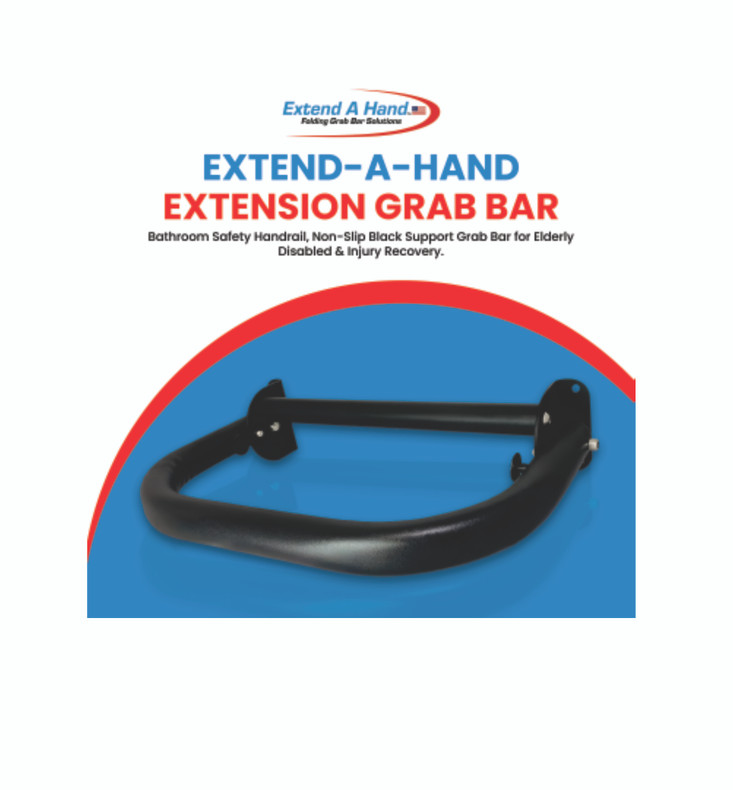
A bathroom fall rarely gives a warning. One missed step coming out of the shower or one unstable transfer near the toilet can change a routine moment into an injury, a hospital visit, or a loss of confidence at home. That is why an extension folding grab bar matters - it provides solid support when needed, then folds flat to keep the room open and usable.
Unlike a basic wall-mounted bar, this style is built for two jobs at once. It must give dependable leverage during sitting, standing, and transfers, while also solving a common space problem in residential and commercial bathrooms. If the bar stays fixed in the room at all times, it can block movement, crowd a narrow layout, or create a visual obstacle. A folding extension design addresses that trade-off directly.
What an extension folding grab bar actually does
An extension folding grab bar mounts securely to the wall and extends outward to provide support away from the wall surface. When not in use, it folds up to reduce obstruction. That sounds simple, but the engineering behind it matters. A support bar used for balance during a transfer is not decorative hardware. It needs locking performance, structural integrity, and a mounting method that matches the wall framing.
For many buyers, the real value is the 12-inch support extension from the wall. That reach gives the user a more practical handhold during movement than a flush-mounted wall bar alone. In a tight bathroom, that can make the difference between awkward positioning and stable support.
The folding feature also helps in shared spaces. One person may need transfer assistance every day, while another wants a clear path and a cleaner look when the bar is not in use. In commercial settings, fold-away support can help preserve maneuvering space without sacrificing readiness.
Where an extension folding grab bar makes the most sense
This product is especially useful beside toilets, near transfer zones, and in bathrooms where floor space is limited. Homeowners often choose it during aging-in-place updates because it supports independence without making the room feel permanently clinical. Caregivers like it because it creates a stronger, more predictable assist point during daily routines.
Contractors and institutional buyers usually look at it through a different lens. They need reliable hardware that supports code-conscious planning, repeatable installation, and long-term durability. In those environments, a folding extension bar is often less about appearance and more about reducing risk while keeping the room functional.
That said, placement is not universal. The right location depends on the user’s mobility pattern, dominant hand, transfer direction, and the layout of the room. A bar that works perfectly in one bathroom may be wrong in another if the stud location, toilet clearance, or transfer path changes.
The features that matter most
A grab bar should never be judged by appearance alone. Stainless steel construction, a positive locking mechanism, and tested weight capacity are what separate dependable support from hardware that simply looks the part.
The first checkpoint is strength. If a user is pushing down during a transfer, the load on the bar can be significant and sudden. That is why tested capacity matters more than generic marketing language. Medical-grade manufacturing and verifiable load testing give buyers a clearer picture of real-world performance.
The second checkpoint is how the bar locks when extended. A folding bar that feels loose or uncertain can undermine user trust fast. People need support equipment that locks solid and stays where expected under pressure. If the bar folds easily when it should be rigid, it is solving the wrong problem.
The third is profile. When folded, the bar should sit flat enough to reduce interference in the room. This is especially important in smaller bathrooms, powder rooms converted for accessibility, and commercial restrooms where clearances matter.
Choosing the right size and fit
Size selection is where many ordering mistakes happen. Buyers sometimes focus only on the extended reach and forget that the mounting width must work with the wall framing. In practice, stud spacing often determines which model will fit properly.
That means the right extension folding grab bar is not just about the user. It is also about the wall. Before ordering, measure the distance between studs at the intended mounting location and confirm the installation surface can support direct mounting. Guessing here creates delays and can turn a straightforward install into a patch-and-repair job.
If you are selecting for a home, think about who will use the bar and how. A smaller profile may be enough for one transfer point, while a longer bar may better suit users who need more contact area or a broader support position. In a facility or multi-user setting, the safest choice is usually the one that accommodates the widest range of needs without compromising the room layout.
Installation is only as good as the stud connection
This type of bar is designed to install direct to wall studs. That is a major advantage because it simplifies the decision-making. Instead of relying on uncertain wall anchors or improvised backing, the bar is attached where the wall is strongest.
Still, "installs in minutes" only holds true when the installer verifies the framing first. Stud finder readings should be confirmed carefully, especially in tiled bathrooms where surface layers can throw off quick assumptions. If the mounting area includes plumbing, electrical lines, or patchwork behind the wall, take the extra time to inspect before drilling.
For homeowners, this is often a hire-or-DIY question. If you are comfortable locating studs precisely and drilling into finished bathroom walls, the job may be straightforward. If not, hiring a contractor is the safer move. Safety hardware only performs as intended when mounted exactly as specified.
ADA compliance and why it matters
Many buyers ask for ADA-compliant products because they want confidence that the hardware aligns with recognized accessibility standards. That is a smart starting point, but compliance is not just a product label. It also depends on how and where the bar is installed.
A well-built extension folding grab bar can be manufactured to meet ADA-related expectations for support hardware, but the finished installation still has to suit the application. Height, placement, surrounding clearances, and user approach all affect whether the result supports accessible use in practice.
For homeowners, ADA alignment often means buying with a higher standard in mind, even if the bathroom is not part of a regulated commercial project. For contractors, healthcare buyers, and facility managers, standards-based selection helps reduce liability and support better project outcomes.
Why made-in-USA manufacturing carries weight here
With safety equipment, where and how it is made matters. A stainless steel grab bar built in an ISO 13485:2016 certified medical manufacturing facility signals tighter process control than generic imported hardware. That does not guarantee the right fit for every project, but it does tell buyers the product comes from a system built around quality and consistency.
That is especially relevant when the bar is expected to support up to 600 pounds in testing. High-capacity hardware should come with manufacturing discipline behind it, not vague claims. Buyers who are protecting a parent, spouse, patient, tenant, or customer have every reason to ask for that level of proof.
This is one reason Extend A Hand stands out in the category. The product promise is direct: folding stainless steel extension grab bars that are ADA-compliant, built in the USA, and engineered to lock solid while saving space.
Who benefits most from this design
Aging adults often benefit first because the bar supports independence without forcing a full room redesign. Caregivers benefit because transfers become more stable and predictable. Veterans and adults recovering from surgery or illness often appreciate the confidence that comes from having a strong, fixed point of support within reach.
Professional buyers see a different advantage. The fold-away design helps them balance accessibility and room function in tighter footprints. That can be valuable in clinics, assisted living settings, hospitality properties, and commercial restrooms where every inch matters.
The key is matching the bar to the use case. If the bathroom has plenty of open space and the support point is always needed, a fixed bar may still make sense. If the room serves multiple users or clear floor space is limited, a folding extension model is usually the more practical choice.
A good safety upgrade should do more than check a box. It should make daily movement more secure without making the room harder to live in. When the bar fits the studs, locks firmly, and folds out of the way when not needed, it does exactly what support equipment should do - stay ready, stay strong, and help people move with more confidence.